Imagine if one of the world’s busiest highways suddenly closed overnight. Traffic would pile up, deliveries would slow down, and prices would quickly rise. That’s exactly what’s happening at sea.
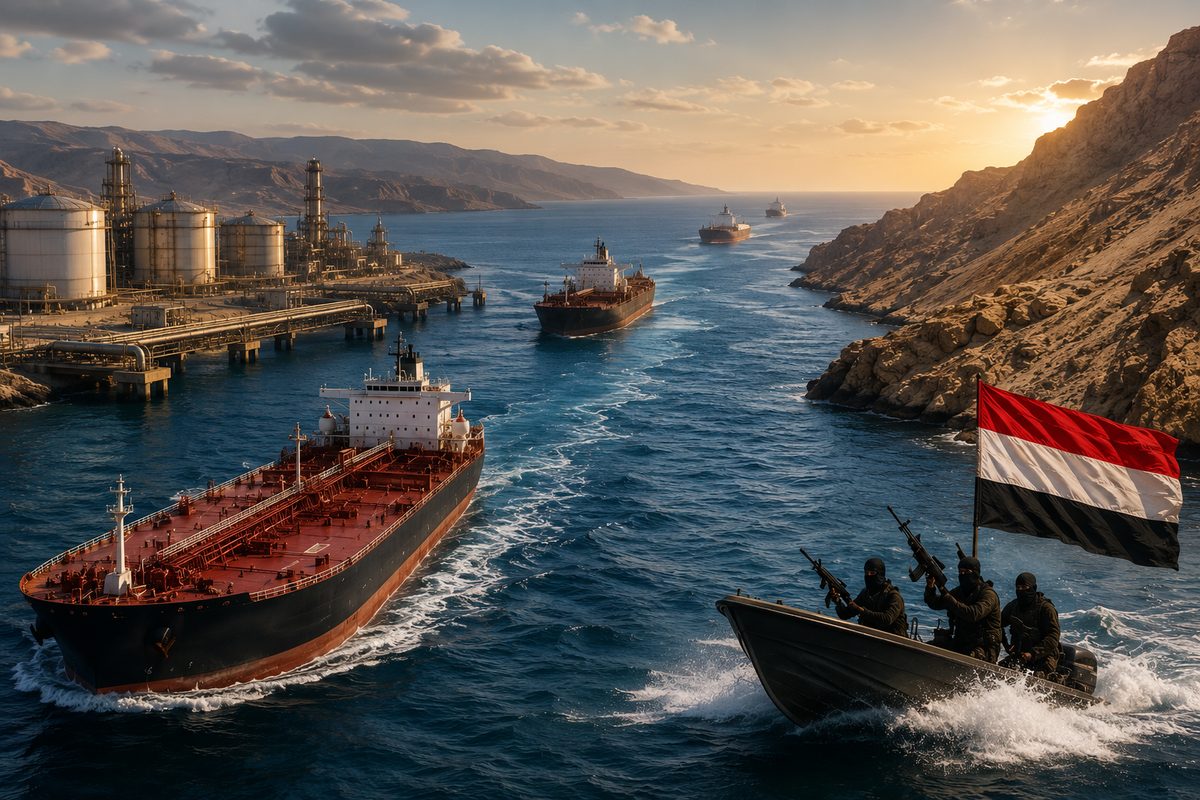
With the Strait of Hormuz already closed, another critical shipping route, the Bab al Mandab, has now become the latest flashpoint. This narrow stretch of water connects the Red Sea to the Gulf of Aden and plays a huge role in moving oil from the Middle East to the rest of the world.
Now, the Houthis in Yemen have announced a blockade targeting Saudi Arabia’s shipping, raising fears that global energy markets could face even more disruption.
Why Is the Bab al Mandab So Important?
The Bab al Mandab sits between Yemen and Djibouti. Although it is only a narrow waterway, it is one of the world’s most important maritime routes.
After the closure of the Strait of Hormuz, countries that export oil had to find other ways to reach global markets. Saudi Arabia became one of the biggest users of the Bab al Mandab after redirecting millions of barrels of oil each day through its Red Sea pipeline to the port of Yanbu.
From there, much of the oil headed south through the Bab al Mandab to customers across Asia.
As a result, this shipping lane became even more important than before.
What Has Happened?
The Houthis, who control much of western Yemen, announced that they would block all shipping linked to Saudi Arabia.
While the blockade mainly targets Saudi vessels, many experts believe that commercial shipping companies could avoid the area altogether because of security risks. Even ships that are not directly targeted may decide the route is too dangerous.
That could reduce the amount of oil reaching international markets.
Why Does This Matter?
Global oil prices depend on a steady supply.
When the Strait of Hormuz closed, around 20 million barrels of oil per day were affected. Alternative routes helped reduce the shortage, but they could not replace everything.
Now, if Saudi exports through the Bab al Mandab are also disrupted, the global supply gap could grow even larger.
A smaller supply usually leads to:
- Higher fuel prices
- More expensive transport
- Rising costs for goods and food
- Increased inflation in many countries
Even nations that do not buy oil directly from the Middle East could feel the effects through higher shipping and energy costs.
Can’t Oil Be Sent Another Way?
There are alternatives, but none are perfect.
Some pipelines allow oil to bypass certain routes, but they have limited capacity. Large oil tankers also cannot easily pass through every canal, and sending ships around the southern tip of Africa adds roughly two weeks to each journey.
Longer trips mean higher transport costs and fewer deliveries reaching customers on time.
Why Are the Houthis Acting Now?
There are two main theories.
The first is that Iran, which has long been accused of supporting the Houthis, may be using the blockade to increase pressure during a wider regional conflict. By opening another front at sea, it creates more uncertainty for global energy markets.
The second theory focuses on Yemen’s long running conflict with Saudi Arabia.
The Houthis and Saudi Arabia have been rivals since Saudi forces entered Yemen’s civil war in 2015. Although a ceasefire began in 2022, recent events have sharply increased tensions.
According to reports, disputes over flights between Iran and Yemen, followed by attacks on Sana’a Airport and missile strikes on Saudi Arabia, have brought the fragile truce to an end.
From this perspective, the blockade may be aimed more at Saudi Arabia than at the wider international community.
What Happens Next?
The biggest concern is that the conflict could spread beyond Yemen.
If attacks increase or more shipping companies avoid the region, oil supplies could tighten further. There are also fears that other export routes, pipelines, and ports could become targets, putting even more pressure on global energy markets.
Governments may be forced to rely on emergency oil reserves to keep supplies flowing, but these reserves are not unlimited.
The Bottom Line
The Bab al Mandab may look like a narrow strip of water on a map, but it has become one of the world’s most important trade routes.
With both the Strait of Hormuz and the Bab al Mandab facing major disruptions, global energy markets are entering a period of uncertainty. Whether the blockade remains limited or develops into a wider regional crisis could determine not only the future of Middle Eastern trade but also the price of fuel, transport, and everyday goods around the world.
The coming weeks will be closely watched by governments, businesses, and consumers alike because what happens in these narrow waterways has the power to affect economies across the globe.