Kenya is discussing what the country should look like beyond Vision 2030. President William Ruto says that conversation cannot focus only on roads, jobs, industries and economic growth.
It must also answer a bigger question:
How will Kenya protect the country it is trying to build?
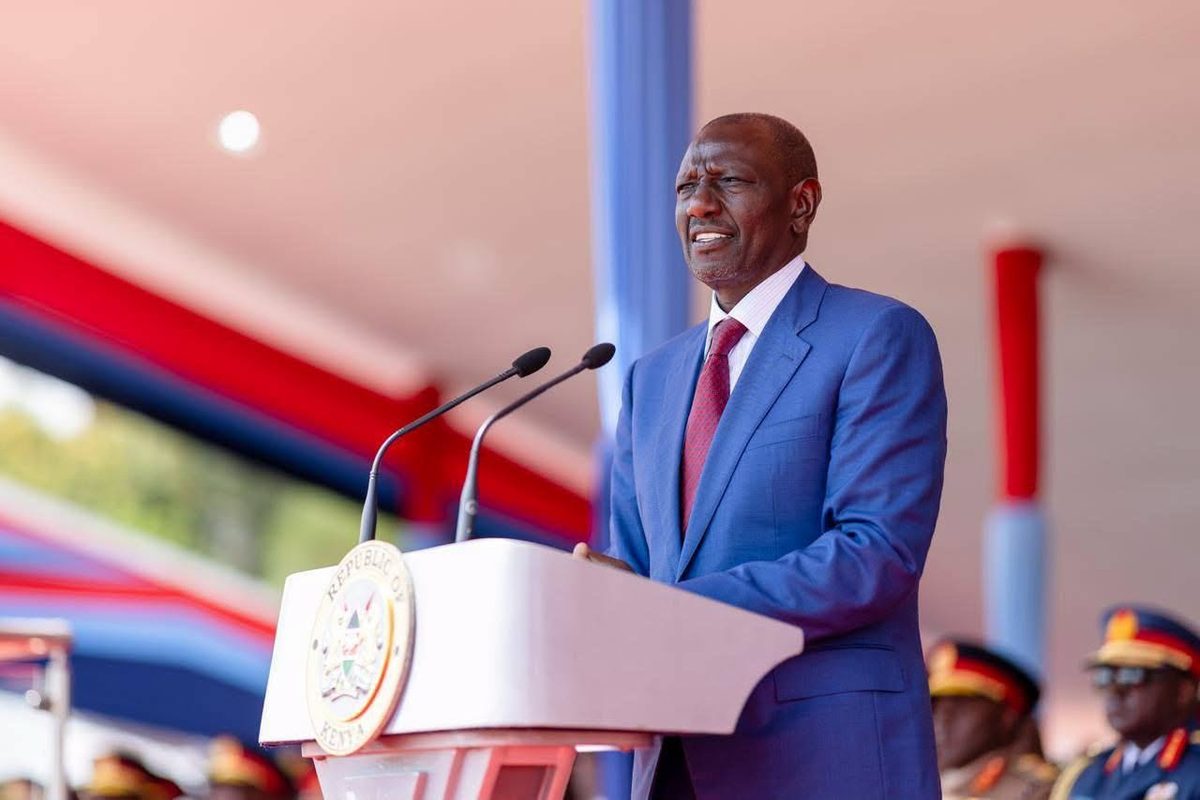
Speaking during the passing out parade of the first KDF recruits cohort of 2025 at the Recruits Training School in Eldoret, Uasin Gishu County, Ruto said national security must evolve alongside Kenya’s development.
Security and development must move together
According to the President, security and development should not be treated as competing priorities.
“Security enables development, and development strengthens security,” he said.
That means Kenya’s security priorities beyond 2030 will have to extend far beyond protecting its physical borders.
The country will increasingly need to protect its digital systems, critical infrastructure, food and energy systems, territorial waters and other parts of the modern economy.
A major cyberattack, for example, can disrupt essential services without a single soldier crossing Kenya’s borders. A threat to energy or food systems can also have consequences for millions of people.
The battlefield itself is changing
Ruto also pointed to emerging threats that would have been difficult to imagine as traditional military challenges a few decades ago.
They include cyberspace, artificial intelligence, climate shocks and new disease outbreaks.
Preparing for these threats will require a military with skills and capabilities that go beyond conventional warfare.
The government, Ruto said, will continue investing in KDF training, welfare and operational readiness while strengthening capabilities in cybersecurity, intelligence, maritime security and military medicine.
“Secure the Kenya we intend to become”
Perhaps the clearest message from the President was that KDF must prepare not only for the threats Kenya faces now, but those the country could face in the future.
“KDF must not simply defend the Kenya of today; it must also secure the Kenya we intend to become.”
That idea places national security directly inside the wider conversation about Kenya beyond Vision 2030.
As the economy becomes more digital and connected, the systems that need protecting will also change. Data networks, ports, energy infrastructure, food supply chains and other critical systems could become just as important to national security as physical territory.
A message to Kenya’s newest soldiers
Ruto congratulated the graduating recruits for completing what he described as a demanding course and reminded them of the responsibility that now comes with wearing the uniform.
His message to them was simple:
Serve with courage, discipline and restraint.
For Kenya, however, the bigger message extends beyond the parade in Eldoret. Building the country envisioned beyond 2030 will require more than economic ambition.
Kenya will also need the ability to protect what it builds.