Imagine a Kenya where every child has access to world-class education, every family can rely on quality healthcare, and every young person has a fair chance at a well-paying job. That is the future envisioned in Kenya's proposed long-term development strategy. It is not just about taller buildings or modern highways, but about improving the everyday lives of ordinary Kenyans.
But can Kenya really become a First World nation? The 'Road to Singapore' report believes the answer is yes. It points out that Kenya once matched or even outperformed countries such as China and South Korea in key economic indicators. Those nations transformed through consistent leadership, strong institutions, industrialisation and long-term planning. The report argues that Kenya can achieve the same if it remains committed to a shared national vision over the next 30 to 40 years.
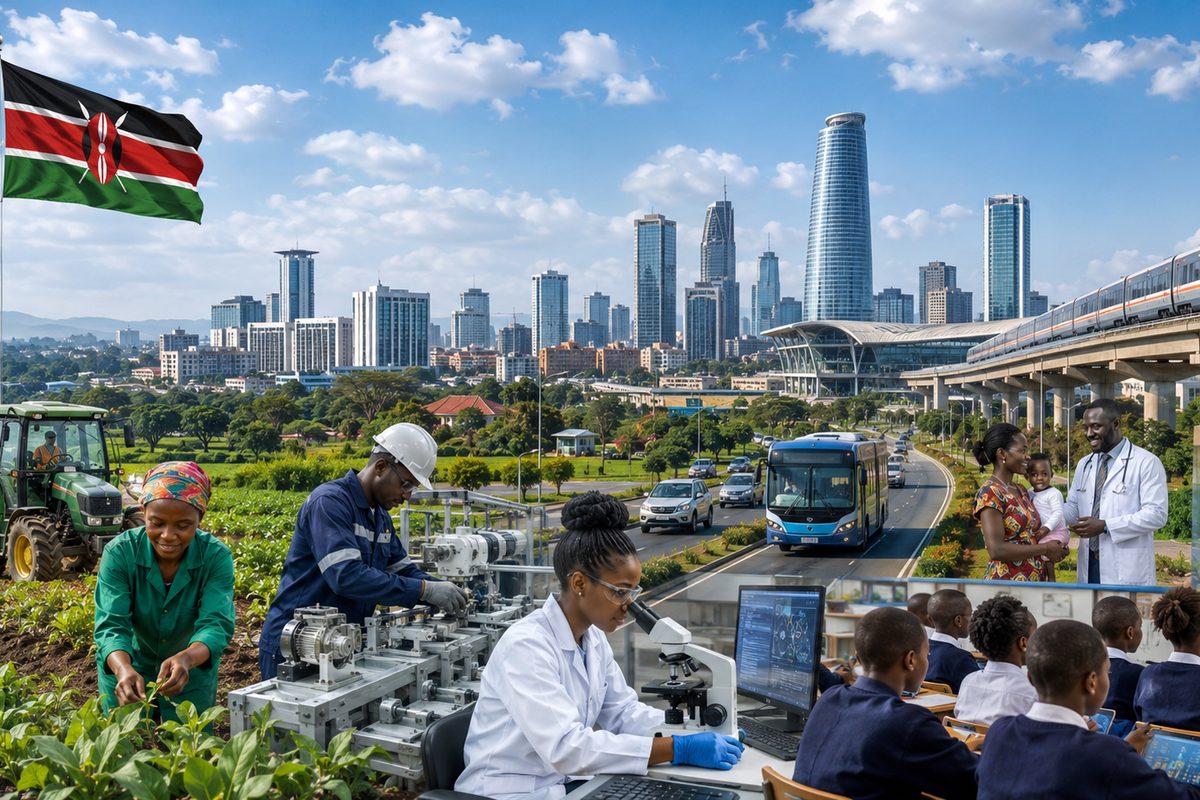
In a First World Kenya, industries would create millions of productive jobs, farmers would earn more through modern agriculture and value addition, and businesses would compete successfully in regional and global markets. Efficient public transport, reliable electricity, clean water and affordable housing would become part of daily life rather than distant aspirations. Strong institutions would deliver public services fairly, transparently and efficiently.
The report also envisions a country driven by innovation, where technology, research and entrepreneurship power economic growth. Universities would produce skilled graduates ready for the industries of tomorrow, while government policies would remain consistent across political transitions, allowing development to continue uninterrupted.
This vision is ultimately about creating a nation where opportunity is available to all. With unity, integrity and long-term planning, Kenya can build a future where every citizen enjoys a higher quality of life and where the country proudly stands among the world's most developed economies.